
Three projects, three Connecticut towns, spanning 2017 to 2025. Painting, inspection, and maintenance work you can check against a real address, not a number we’re asking you to trust.

Painting a fire escape isn’t just a fresh coat over what’s already there. The steel gets prepped first, loose rust and failing paint stripped back to sound metal, before a rust-inhibitive primer goes on and the topcoat follows. On older buildings, that prep work often means working over paint that predates 1978, which means lead-safe practices, not just a scraper and a tarp.
That’s the approach behind every fire escape painting job we take on in Connecticut, Stamford included.
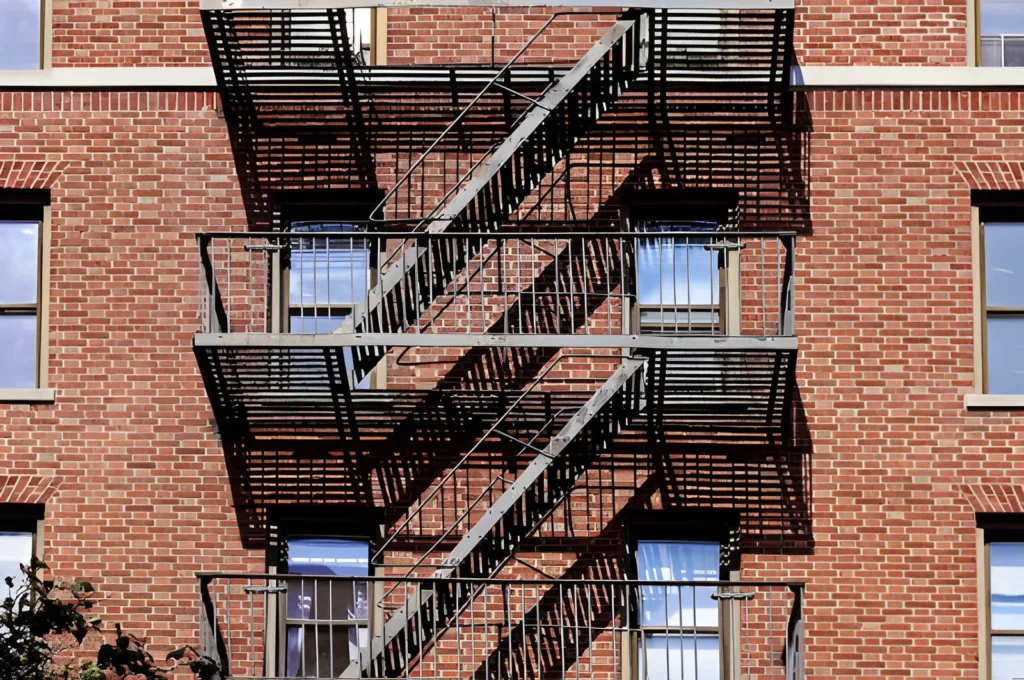
An inspection means someone actually gets up on the structure, not just looks at it from the sidewalk. Connections, treads, railings, and the drop ladder all get checked, and the owner receives a written report documenting what was found, something to keep on file rather than take on our word alone.
That’s the standard we hold every Connecticut inspection to, Bridgeport included.
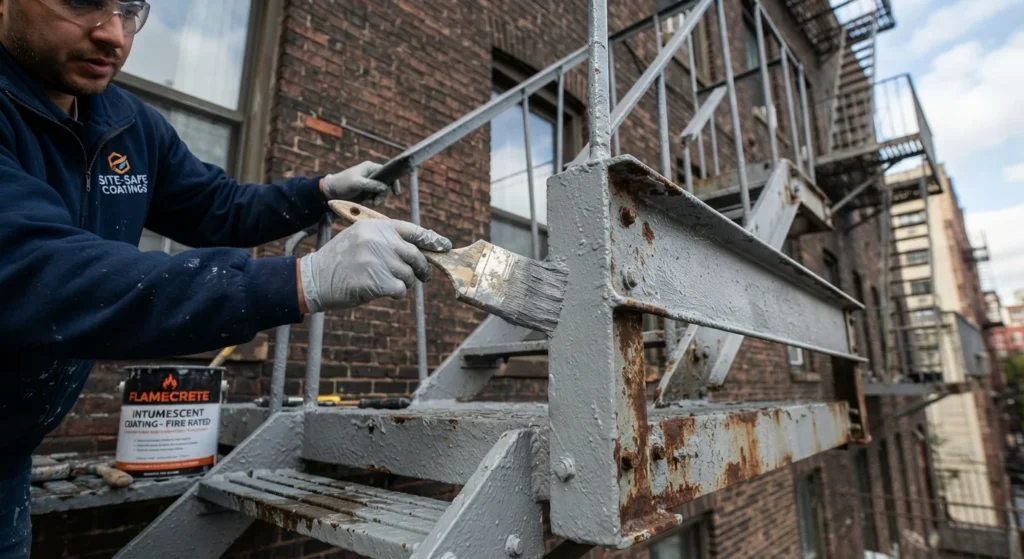
This is our most recent project, and it’s the one that matters most on a page like this. Older work only proves what a business used to do. A 2025 job is evidence of what it’s doing right now.
Refurbishment and maintenance means renewing surfaces and hardware before small wear turns into a bigger repair, extending the life of a structure that’s still sound rather than waiting for it to fail.
Practical safety protocols, certifications, and insurance coverage behind every project.
A lot of Connecticut’s fire escapes carry paint applied well before 1978, which means lead is a real possibility, not a hypothetical. We’re an EPA Lead-Safe Certified Firm, which means our crews follow lead-safe work practices, containment, controlled cleanup, the specific steps the EPA’s RRP rule requires, on any job where disturbing old paint is a possibility. On older buildings, that’s not optional. It’s how the work gets done.
OSHA safety certification covers how our crews approach the physical work itself, the structural and fall-related risk that comes with being on a fire escape at height. EPA Lead-Safe Certification covers a separate risk entirely, what happens when old paint gets disturbed during prep. Both matter, and they cover different things. Neither substitutes for the other.
We carry $2 million in general liability coverage, and a certificate of insurance is available on request before work starts, not after someone has to ask why one wasn’t offered. For most jobs, that’s the paperwork a property manager or board actually needs before a crew is authorized on site.
We work across Connecticut from our base in Southington. The three projects above happen to sit in Fairfield County, Stamford, Bridgeport, and Trumbull, but that reflects where recent work has landed, not a limit on where we go.
Working in Connecticut since 2004, carrying $2 million in general liability coverage. Or start with the service page for the work you actually need.
Connecticut’s trusted fire escape contractors. From certified safety inspections and heavy-duty structural repairs to professional painting and maintenance, we keep your building safe, code-compliant, and weather-protected statewide. Proudly serving CT property owners since 2004.
© Copyright 2026. All Rights Reserved.